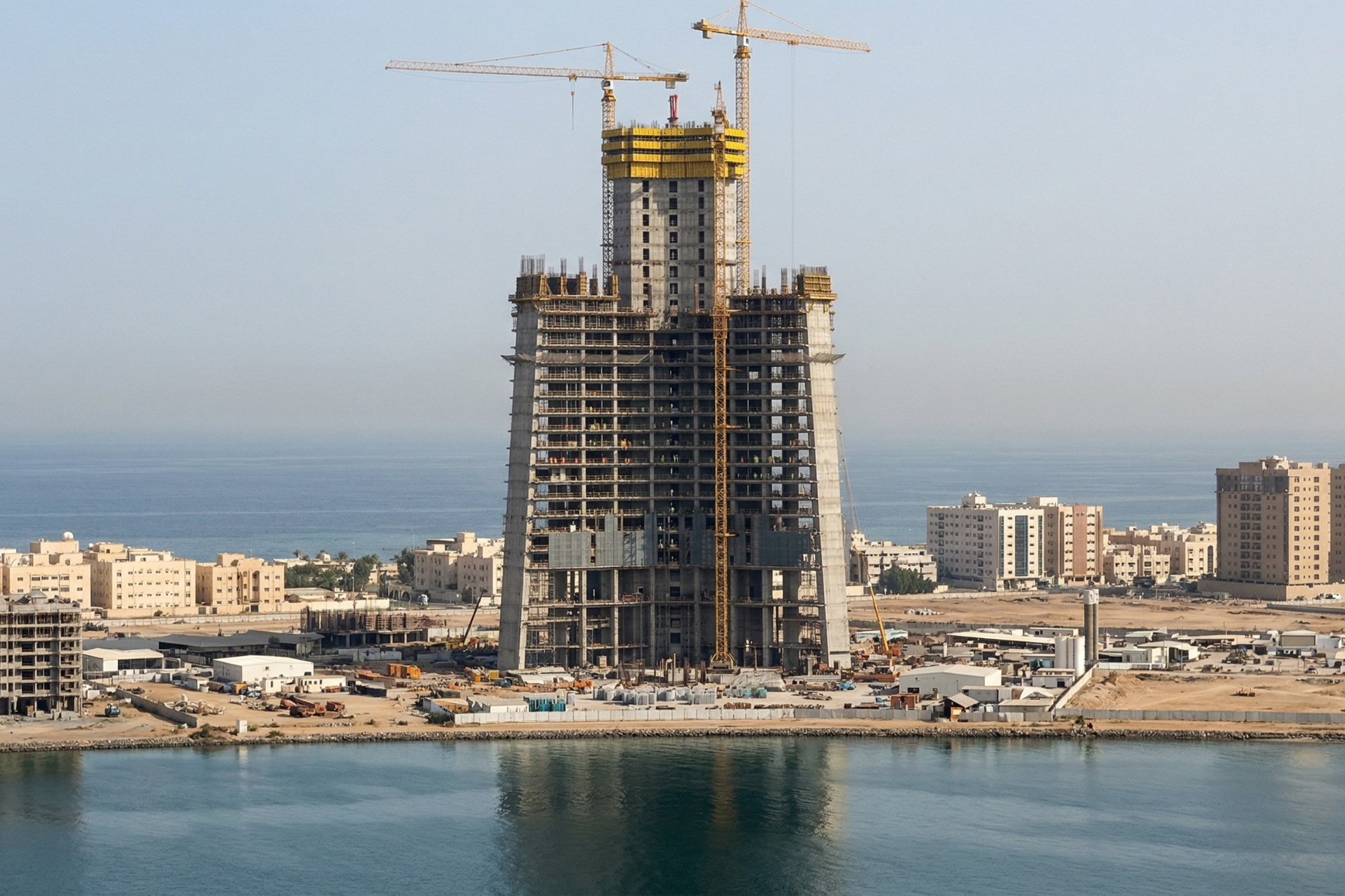
The Jeddah Tower, poised to become the world’s tallest skyscraper, is making impressive strides in construction, with significant progress reported in recent weeks.
Designed by renowned architects Adrian Smith and Gordon Gill, the iconic tower is set to surpass the 1-kilometer (3,281 feet) mark, overtaking the current record holder, the Burj Khalifa in Dubai (which also bears the architectural signature of Adrian Smith).
According to recent updates from the project’s architectural team, the tower has already reached advanced stages of vertical construction and is expected to hit its 100th floor very soon. One of the lead architects shared that the building is “moving very well,” with construction teams achieving strong momentum.
As the structure rises higher, the floor plates naturally become more compact, allowing the pace of floor-by-floor construction to accelerate efficiently. Following the 100th-floor milestone, work will continue toward the observation deck levels before culminating with the addition of the striking spire that will define the tower’s pinnacle.
The Jeddah Tower is planned to feature more than 130 floors and will stand as a landmark of engineering excellence and architectural simplicity. Its elegant, tripod-like form — with three wings ascending at different rates — creates a powerful yet minimalist silhouette that has been compared to a folded paper airplane standing upright. This clean, striking design not only delivers visual impact but also enhances structural efficiency.
A key highlight of the project is its focus on sustainability and innovation. By optimizing the use of materials and reducing embodied carbon through smarter structural solutions, the tower achieves greater heights with improved efficiency — a significant advancement in modern skyscraper development.
Once completed, the Jeddah Tower will serve as the centerpiece of the ambitious Jeddah Economic City master plan. This large-scale urban development is rapidly taking shape and is expected to evolve into a vibrant, self-sustaining district — acting as a powerful catalyst for economic growth in Jeddah and the wider Kingdom of Saudi Arabia.
The current projected completion timeline for the tower remains on track for 2028, marking an exciting new chapter in Saudi Arabia’s visionary real estate and infrastructure journey.
At Basri Developments, we are proud to be part of Jeddah’s dynamic growth story. Projects like the Jeddah Tower highlight the incredible momentum in the city’s skyline and reinforce why now is an opportune time to explore premium real estate opportunities in one of Saudi Arabia’s most promising markets.
Stay tuned for more updates on transformative developments shaping the future of Jeddah.
Frequently Asked Questions (FAQs)
Generally, residential property transactions are subject to RETT and are exempt from VAT. However, commercial property transactions may attract VAT instead of or in addition to RETT depending on the nature of the deal. The two taxes are not typically applied simultaneously on the same transaction, but this should be verified for your specific deal type.
Yes. The tax applies to foreign nationals and expats in exactly the same way it applies to Saudi citizens. There are no expat-specific surcharges — the rate is a flat 5% regardless of your nationality.
This depends on the specific development and location. Some properties available to expats are freehold (full ownership), while others may be structured as long-term leasehold arrangements. Understanding the ownership structure before signing is critical, as it affects your resale rights and the property’s value.
Joint ownership between a foreign national and a Saudi citizen is possible, but the legal structure of such arrangements needs careful consideration. The ownership split, liability for taxes like RETT, and what happens upon the death of one party should all be addressed in the sale agreement.
Access to mortgage financing in Saudi Arabia for non-residents and expats is more limited compared to Saudi nationals. Some banks do offer products for resident expats, but terms, eligibility, and loan-to-value ratios differ significantly. It’s advisable to confirm financing options early in the process before selecting a property.
Saudi Arabia does not currently have a recurring annual property tax in the traditional sense. However, undeveloped or vacant land may be subject to the White Land Tax (WLT), which is a separate levy aimed at encouraging development. Understanding whether your purchased land or property falls under this is important for long-term cost planning.