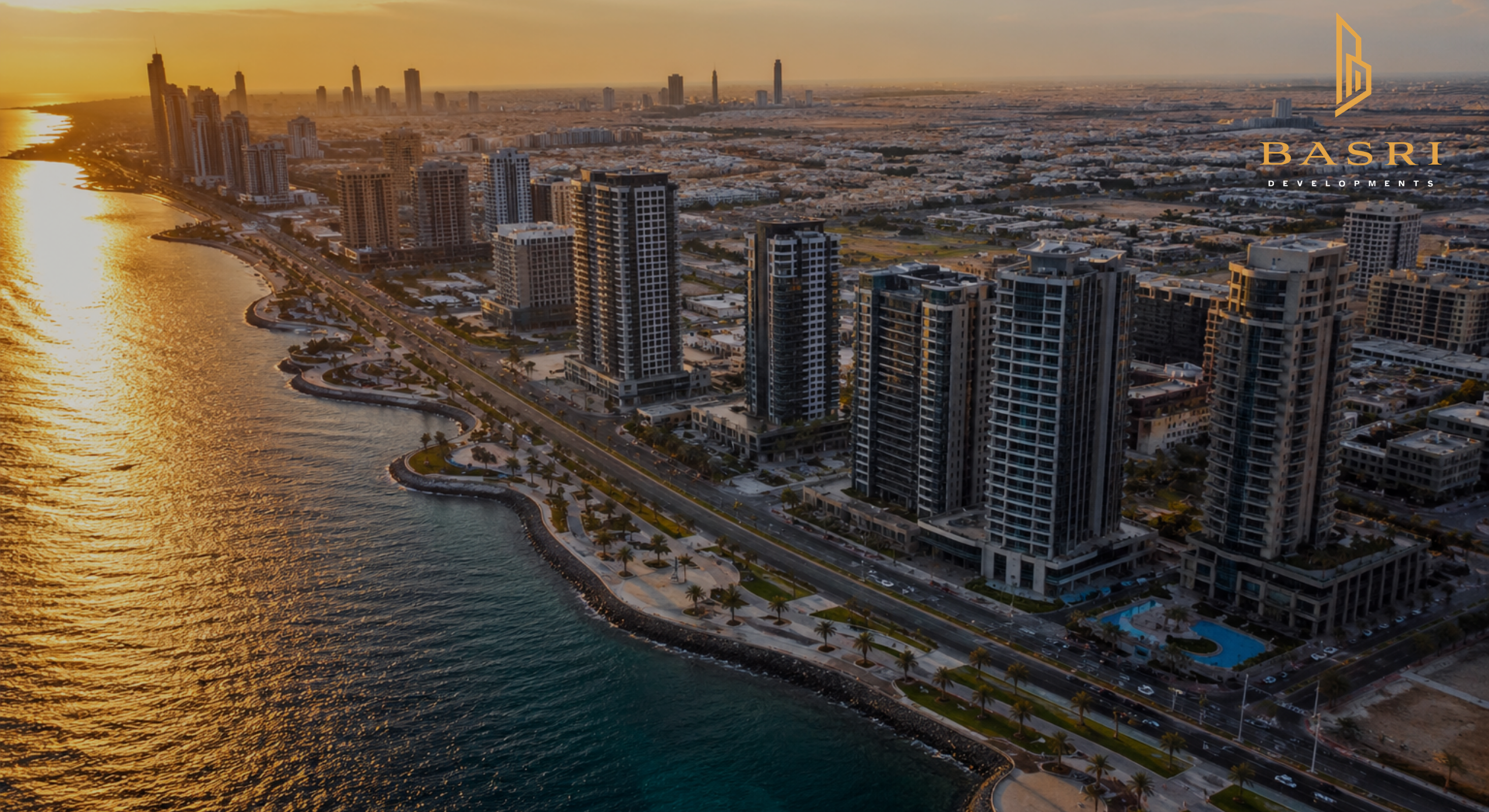
Saudi Arabia’s landmark 2026 foreign ownership law has opened one of the world’s most exciting real estate markets to expats and international investors. Here is everything you need to know — and why Jeddah is the city to watch.
Saudi Arabia Just Changed the Rules for Foreign Buyers
For decades, expats living and working in Saudi Arabia had one option: rent. No matter how long you had been in the Kingdom, how established your career, or how much you loved Jeddah — you simply could not own a home here.
That changed on January 21, 2026.
Following Royal Decree M/14, Saudi Arabia enacted the Law of Real Estate Ownership by Non-Saudis — the most significant real estate reform in the Kingdom’s history. For the first time, individual foreign nationals, expatriates, and international investors can own residential and commercial property in designated zones across the Kingdom, including Jeddah.
“This is not just a policy update. It is a structural shift that opens one of the world’s strongest-yielding real estate markets to global capital for the first time.”
The Numbers That Matter
Saudi Rental Yield | 7-8% | Jeddah average, 2026 |
Foreign Ownership | 100% | Permitted in designated zones |
Rental Income Tax | 0% | No income tax on property returns |
Expat Population KSA | 15.7 million | 44% of total population |
IMF GDP Growth 2026 | 4.0% | Non-oil sector driven |
$6.3 Billion | Foreign capital | Entering Saudi real estate in 2026 |
Why Jeddah? The Expat Investor’s Case for Saudi Arabia’s Coastal Capital
Riyadh gets the headlines. But Jeddah is where savvy investors are quietly moving.
While Riyadh’s residential prices have nearly doubled in five years — creating real affordability pressure — Jeddah offers something rare: strong rental yields, calmer price growth, genuine lifestyle infrastructure, and a coastal premium that is still significantly underpriced compared to comparable markets globally.
Jeddah vs Riyadh: What the Data Says
Factor | Riyadh | Jeddah |
Rental Yield | 7-9% (corporate) | 7-8% (tourism + coastal) |
Price Growth (5yr) | ~100% (overheated) | Moderate, stable |
Rent Freeze Policy | Yes (5-year cap) | No — free market |
Short-term Rentals | Moderate demand | Highest in Kingdom |
Best For | Long-term blue chip hold | Capital appreciation + lifestyle |
Entry Price | Higher (North Riyadh) | Better value for quality |
Jeddah is the undisputed capital of short-term rentals in Saudi Arabia. Tourism growth, weekend getaways, and a growing events calendar are driving consistent occupancy across the Corniche and coastal districts.
The Foreign Ownership Law: What Expats Actually Need to Know
Here is a straightforward breakdown of the 2026 law — no legal jargon, no vague language.
Who Can Buy?
Non-Saudi individual investors and expats
Foreign-owned companies and licensed investment funds
Non-resident foreigners (for the first time in Saudi history)
UAE citizens and GCC nationals under updated bilateral frameworks
What Can You Buy?
Residential apartments, villas, and townhouses in approved zones
Commercial properties and office spaces
Agricultural land (in designated areas)
Off-plan units from REGA-licensed developers
Digital fractional ownership stakes — recognised officially by REGA
Key Restrictions to Know
Non-Muslims cannot purchase property in Makkah or Madinah
Ownership is limited to designated zones approved by REGA
A 5% Real Estate Transaction Tax (RETT) applies — typically paid by the seller
Mortgage eligibility requires a valid Iqama and Saudi employment income verification
Foreign mortgage applicants typically require a 30-40% down payment
Premium Residency Pathway
Investors who purchase residential property valued at SAR 4 million or more (fully owned, no mortgage) become eligible for Saudi Arabia’s Premium Residency — a significant long-term benefit for expats looking to build a permanent base in the Kingdom.
Jeddah’s Best Neighbourhoods for Expat Investors
Not all areas are equal. Here is where the data and local insight align for expat buyers and investors in 2026.
Al Rehab District — The Rising Residential Hotspot
Al Rehab is one of Jeddah’s fastest-growing residential districts, attracting a strong mix of young Saudi families and established expat professionals. Its modern infrastructure, wide arterial roads, and proximity to key commercial corridors make it a compelling choice for buyers seeking long-term capital appreciation in a neighbourhood that is actively developing. Demand for well-finished apartments here is consistently high, and the area’s growth trajectory aligns directly with Jeddah’s Vision 2030 urban expansion plans. Best for: expat investors seeking capital growth in an upward-moving neighbourhood with strong tenant demand.
Darb Al Haramain — Gateway Location, Strategic Value
Darb Al Haramain holds a uniquely strategic position in Jeddah’s urban geography. As a corridor connecting key parts of the city and benefiting from the ongoing development of the Haramain High Speed Rail ecosystem, this district is drawing increasing interest from both residential buyers and investors who understand the long-term infrastructure story. Properties here offer solid rental fundamentals driven by professionals, families, and visitors requiring well-located accommodation. The area’s connectivity and accessibility give it lasting relevance in Jeddah’s expanding property market. Best for: investors looking for a connectivity-driven asset with long-term infrastructure tailwinds.
Al-Fayhaa District — Established Community, Enduring Demand
Al-Fayhaa is one of Jeddah’s most established and respected residential districts — a mature neighbourhood with deep community roots, good schools, retail amenities, and consistent demand from families who value stability and liveability. For expat investors, Al-Fayhaa offers exactly the kind of tenant profile that produces reliable, low-vacancy rental income: long-term family tenants who renew year after year. The district’s reputation and established infrastructure mean it holds value well through market cycles. Best for: expats seeking stable, low-risk rental income from a proven, family-oriented Jeddah neighbourhood.
Saudi Arabia vs Global Alternatives: The Investment Case
The numbers are hard to argue with. Saudi Arabia in 2026 offers a combination of factors that is genuinely rare globally.
Market | Yield | Income Tax | Ownership | Entry Ease |
Saudi Arabia (Jeddah) | 7-8% | 0% | Open 2026 | Easy — REGA platform |
Dubai, UAE | 5-6% | 0% | Open | Mature market |
London, UK | 2-4% | 20-40% | Open | High entry cost |
New York, USA | 2-3% | ~30% | Open | Very high cost |
Singapore | 2-3% | 17% | Restricted | Complex |
Saudi Arabia delivers no income tax on rental earnings. Combined with 7-8% Jeddah yields, investors keep significantly more of their gross returns compared to London, New York, or Singapore.
Vision 2030 and What It Means for Your Investment
Vision 2030 is not a slogan. It is a SAR-denominated infrastructure and economic diversification programme that is actively reshaping Saudi cities — and directly underpinning property values.
What Is Already Driving Jeddah’s Growth
Jeddah Central Project — a massive urban regeneration development along the waterfront
King Abdulaziz International Airport expansion — positioning Jeddah as a regional aviation hub
Red Sea tourism infrastructure — driving demand for short-term and furnished rentals
Jeddah Tower — set for completion around 2027, will be the world’s tallest building
Over 600 multinational companies relocating regional headquarters to Saudi Arabia
Population growth toward 40 million by 2030 — sustained housing demand
Jeddah sits at the intersection of Red Sea tourism, the Hajj economy, and Vision 2030 coastal development. This is not speculative growth — it is government-backed, sovereign-funded, and already visible on the skyline.
How to Buy Property in Saudi Arabia as a Foreigner: Step by Step
Step 1 — Define Your Goal
Are you buying to live in? For rental income? For long-term capital appreciation? The right property type, neighbourhood, and payment structure depends on your answer. This is the first conversation any serious developer or agent should have with you.
Step 2 — Verify Your Eligibility Zone
Not every property qualifies. Check that your target development sits within a REGA-approved foreign ownership zone. Reputable developers like Basri Developments will confirm this upfront and provide full REGA documentation.
Step 3 — Conduct Legal Due Diligence
Verify the developer’s REGA licence, the project’s construction permits, title deed status, and escrow arrangements. Saudi Properties — the official government platform — allows you to verify this digitally.
Step 4 — Arrange Finance
Foreign buyers typically require a 30-40% down payment for mortgage eligibility. Proof of Iqama, Saudi-source income, and bank statements are standard requirements. Several Saudi banks are now actively structuring products for foreign buyers — get pre-approval before committing.
Step 5 — Sign and Register
All transactions are registered through REGA and the official notary system. Ensure your sales agreement, payment schedule, and delivery milestones are clearly documented. The 5% RETT is settled at this stage.
Step 6 — Partner with the Right Developer
The developer you choose determines everything: build quality, delivery timeline, after-sales support, and the long-term value of your asset. In a market developing at the pace Saudi Arabia is, due diligence on your developer is as important as due diligence on the property.
Why Basri Developments?
Why Basri Developments?
At Basri Developments, we have built our reputation on one principle: delivering homes in Jeddah that we would be proud to live in ourselves.
Our flagship projects such as:
Elementa
Park Residence 2
JIDIA TOWERS
Al-Ezz Towers
are designed specifically for the discerning expat buyer — combining premium finishes, strategic Jeddah location, and full REGA compliance for foreign ownership. We handle everything from legal verification to payment plan structuring, so your investment journey is clear, protected, and profitable.
REGA-licensed and fully compliant with 2026 foreign ownership law
Transparent payment plans designed for expat buyers
Dedicated English-speaking advisory team
Full documentation and legal support included
Proven track record in Jeddah real estate development
Contact Basri Developments now — your Saudi Arabia property journey starts here.
Basri Developments — Curating premium real estate opportunities in Saudi Arabia since Vision 2030 began shaping the future.
Frequently Asked Questions (FAQs)
Generally, residential property transactions are subject to RETT and are exempt from VAT. However, commercial property transactions may attract VAT instead of or in addition to RETT depending on the nature of the deal. The two taxes are not typically applied simultaneously on the same transaction, but this should be verified for your specific deal type.
Yes. The tax applies to foreign nationals and expats in exactly the same way it applies to Saudi citizens. There are no expat-specific surcharges — the rate is a flat 5% regardless of your nationality.
This depends on the specific development and location. Some properties available to expats are freehold (full ownership), while others may be structured as long-term leasehold arrangements. Understanding the ownership structure before signing is critical, as it affects your resale rights and the property’s value.
Joint ownership between a foreign national and a Saudi citizen is possible, but the legal structure of such arrangements needs careful consideration. The ownership split, liability for taxes like RETT, and what happens upon the death of one party should all be addressed in the sale agreement.
Access to mortgage financing in Saudi Arabia for non-residents and expats is more limited compared to Saudi nationals. Some banks do offer products for resident expats, but terms, eligibility, and loan-to-value ratios differ significantly. It’s advisable to confirm financing options early in the process before selecting a property.
Saudi Arabia does not currently have a recurring annual property tax in the traditional sense. However, undeveloped or vacant land may be subject to the White Land Tax (WLT), which is a separate levy aimed at encouraging development. Understanding whether your purchased land or property falls under this is important for long-term cost planning.